In early January 1919, the London, England art season's premier event unfolded at the Royal Academy of Arts. The occasion was the Canadian War Memorials Exhibition, a stunning display of paintings and sculptures depicting the Canadian Expeditionary Force in World War I.
Some forty years later, the same Royal Academy juried a young Londoner's paintings for exhibition. The canvases were considered modest but promising. Today, John M. Horton looks back on a career that has vaulted him to pre-eminence in the world of marine painters. His work has also been exhibited many times by the Royal Society of Marine Artists.
The earliest years were classic. A catastrophic accident, years of convalescence and an over-protectiveness that can either smother or allow an only child to bloom precluded the usual childhood pursuits. Instead, his young energies were redirected into art - at which from the beginning he excelled - and music. The most dangerous sport he was permitted was sailing, and one senses that he forced the choice past parental fears.
In 1966, he packed up his young family and emigrated to Vancouver. Within weeks of his arrival, he had set up his architectural rendering practice in the Marine Building, held an exhibition at the Bayshore Inn and was promptly deluged with clients.
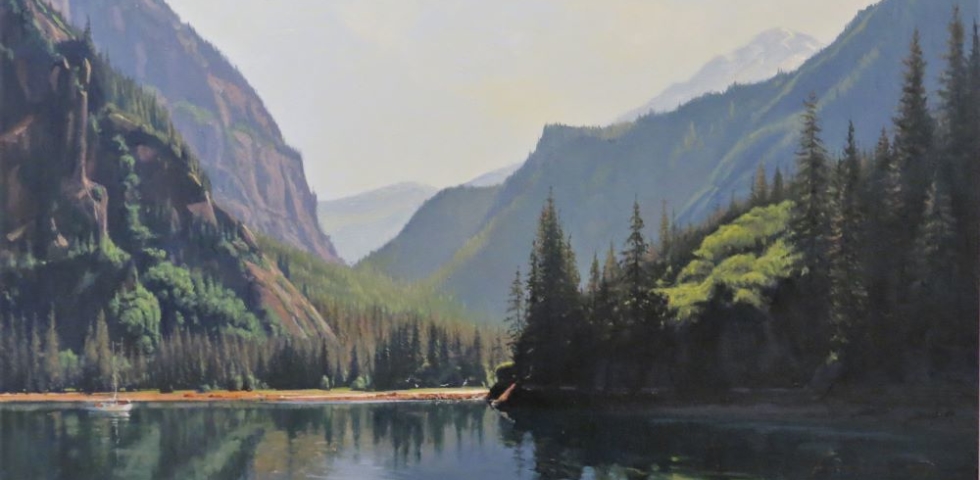
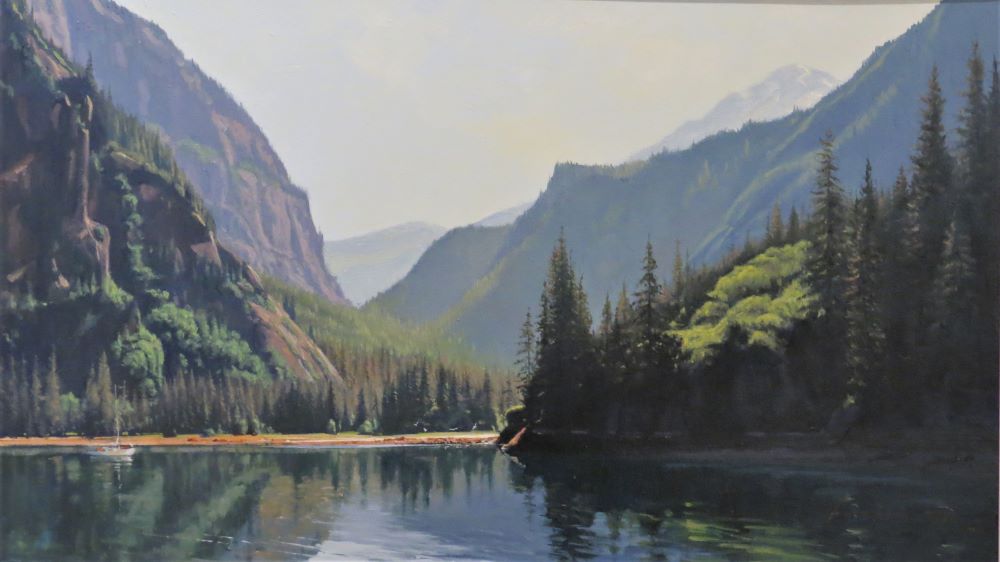
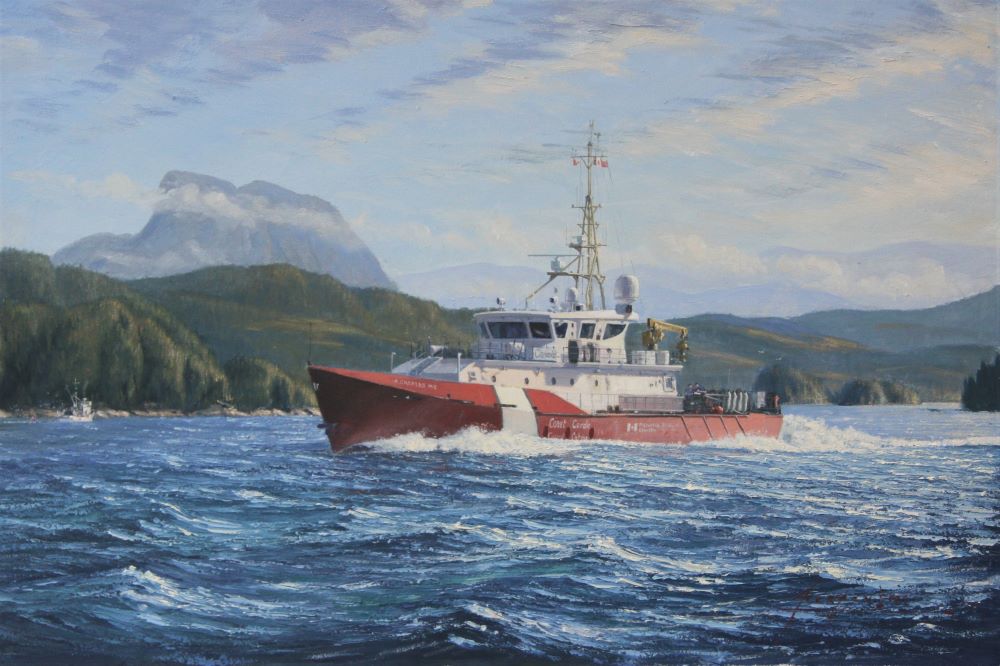
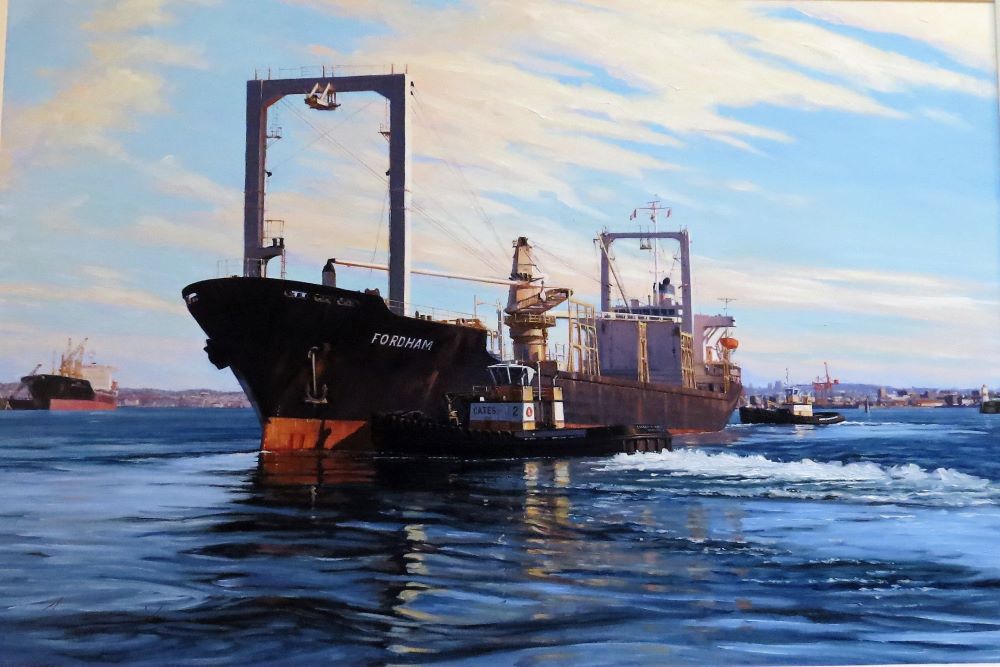
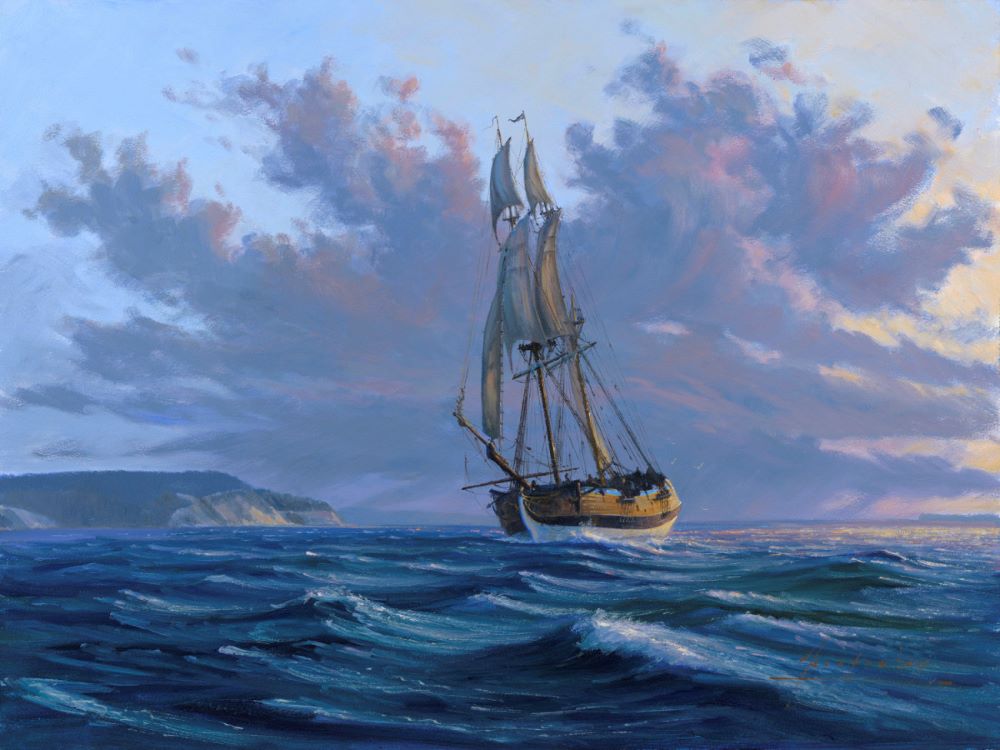
Horton's insistence on historically accurate detail - Ken Alderice of Tsawwassen's Marshall Clark Gallery rather understates when he notes Horton's creations are "accurate historical references" - verges on the pathologic, certainly unmatched by contemporaries. Many of his canvases incorporate recognizable shore features. His dedication is such that backgrounds must reflect the work's period, whether it be present-day or the 18th century. And virtually all of his paintings reflect an historical story. Were Captain George Vancouver around today, the settings of Horton's vaunted RE:DISCOVERY '92 panels documenting the great explorer's famous West Coast expedition would be recognizable to him. Small wonder. Horton had resailed Vancouver's entire 1792/94 voyages of discovery from Washington State's Olympic Peninsula to Alaska in researching this definitive body of work.
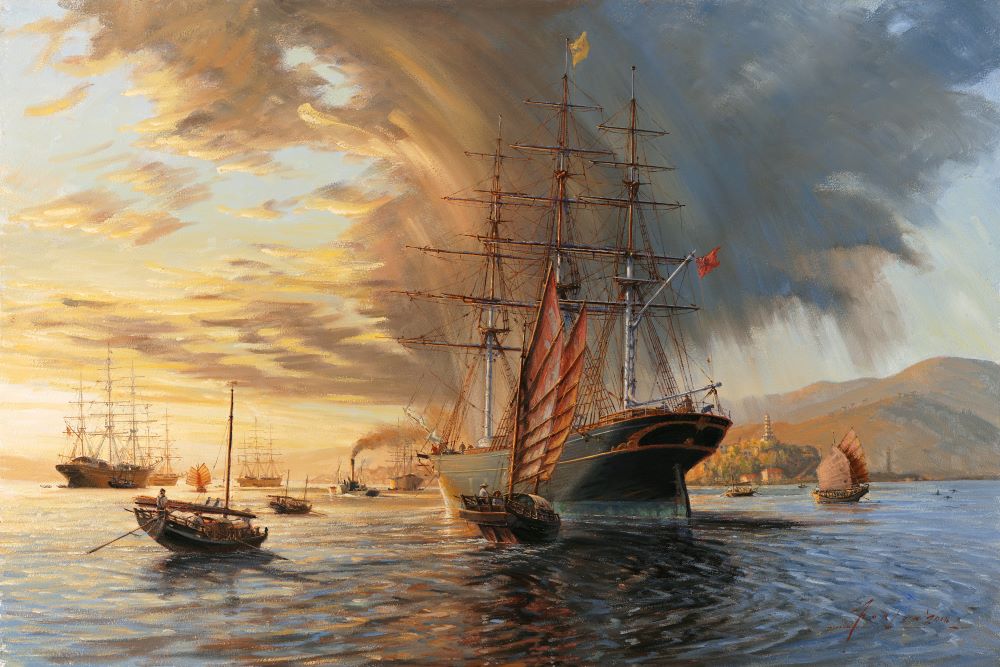
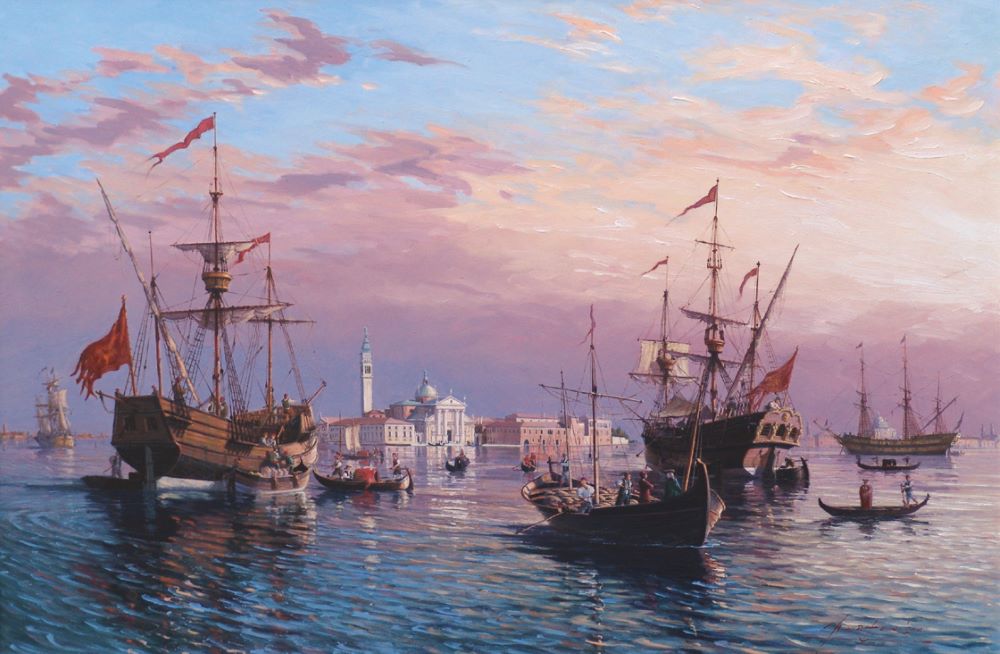
His attention to technical accuracy and detail is equally legendary. In order to get the lines and perspective just right, he always draws a ship to the keel, although the finished canvas reflects a vessel only to the waterline. He pores over original naval architectural plans, renderings and ships logs. Patrons have observed that in viewing a Horton canvas, one can determine the season, the time of day, the atmosphere and even the temperature.
He makes no apologies for his quest for perfectionism. "I'm never satisfied with what I've done," says the artist. "Every brushstroke I do must be better than the last one."
Such devotion does not go unrecognized. Horton's oils are highly prized by galleries, museums and private collections the world over. He has earned the hard-won respect of buyers, mariners and colleagues alike. He is a member of the Canadian Society of Marine Artists, the Federation of Canadian Artists, and The Honourable Company of Master Mariners of Canada. In the late Dennis Brook-Hart's definitive Twentieth Century Marine Painting, he is the only Canadian marine painter mentioned. In 2002 he accepted the Canadian government's invitation to record the nation's navy in action against terrorism in the Arabian Gulf. Through his work Horton assists many worthwhile charities.
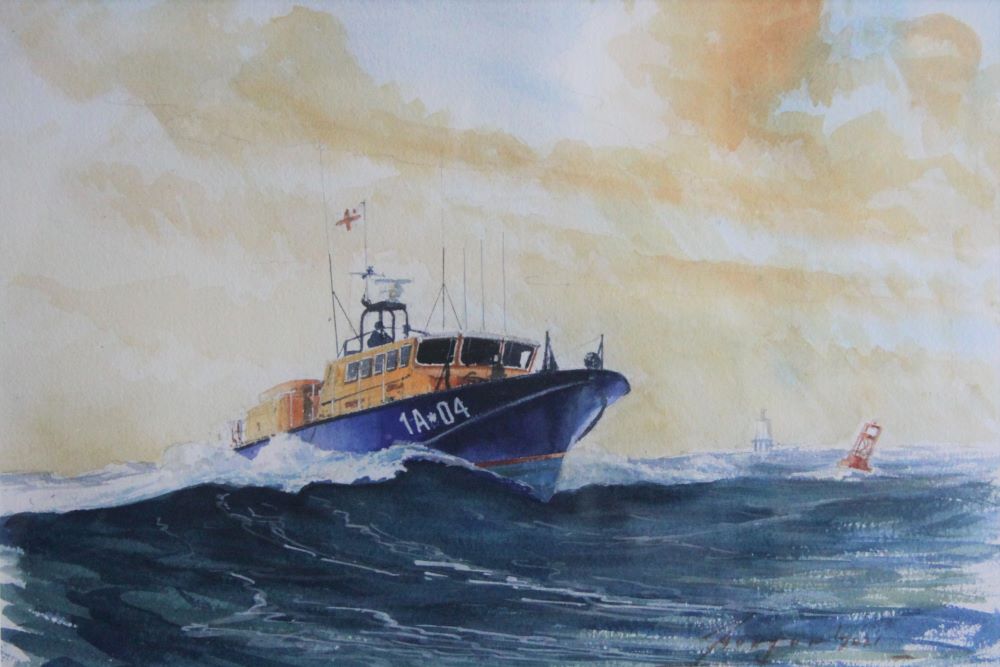
The converted gillnetter has yielded to the somewhat roomier 51-foot Artist's Life, the restored Pearl Harbour launch of Admiral Nimitz, now doing double-duty as the Steveston Lifeboat and responsible for more than 600 sea rescues. Horton's attachment to the Canadian Lifeboat Institute is a direct consequence of witnessing the fishermen's desperate way of life some forty years earlier during the Cod War. His empathy for them remains limitless.
His other great passion is the restoration of George Vancouver's reputation. "I am very incensed that Vancouver never received the recognition he deserved and was unfairly and maliciously tarnished by an influential subordinate. All of my research points to Vancouver being a great man," Horton says. "If it wasn't for George Vancouver, we'd be today Spanish, American or Russian." In fact, Horton remains so moved by Vancouver's plight that he sees no end to producing paintings for his RE:DISCOVERY '92 series which does homage to the extraordinary 18th century explorer.
In May 2002 Horton returned from a stint with the Canadian naval task group's Operation Apollo in the Arabian Gulf. His impressions of a modern navy in action are preserved on six canvases donated to the nation. They reflect not only interdiction and boarding of suspect vessels but the dedication of the naval personnel themselves.
Continuing the practice of Canada's war artists is assuredly of enormous satisfaction to the traditional side of John Horton.


